Alcohol consumption is one of the leading causes of mental health issues for college students.
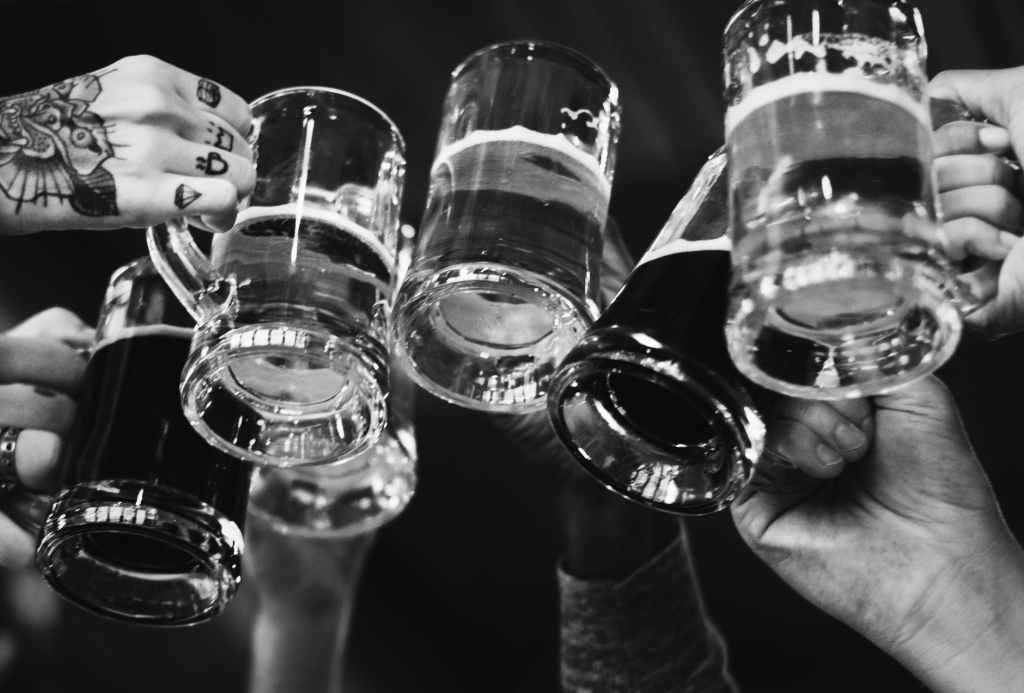
Many students turn 21, the legal drinking age in America, while in school.
The typical college students are at an age in between adulthood and childhood, the time where you’re supposed to ‘find yourself.’ A study done to see if there’s a correlation between alcohol use and mental health (as well as e-cigarette use) found that
Students aged 21–30 were more likely to consume alcohol than to be non-drinkers.
Kathryn R. Hefner, Addictive Behaviors, Volume 91
People who participated in drinking, especially binge drinking, and e-cigarette use seemed to exhibit more mental health issues. The question is, why drink?
Alcohol = FUN

There’s an expectation that drinking makes everything fun. And it makes some sense. Alcohol is a depressant that slows you down so that you stop caring much about the things that usually hold you back. Talking to people becomes easy. And no matter who is there, you all have one thing in common, drinking.
Fraternities, an institution exclusive to college, have a reputation for large parties. And parties, of course, are centered around alcohol use. “Going out” usually entails drinking of some sort, often pregaming at someone’s house before going to the predestined place. “Let’s get trashed,” has become an exciting prospect.

Alcohol has also been glorified in the media. Take the TV show How I Met Your Mother, for example. The group spends the majority of their time at a bar, and when they aren’t at the bar, they are at a club or at someone’s house, drinking. The children freak out when they find out everyone in the group were once smokers, but drinking is not a big deal. There aren’t many times in that show that alcohol isn’t present in some form.
What can we do?
Many universities are already recognizing these tendencies and responding. Awareness is one of the first step with any problem, and this is no exception. Becoming a drug free campus takes away immediate access and exposure. I, myself, went to Boise State University, which is a drug free campus, and I liked not having to worry about dealing with alcohol while going to school. There will always be people who break the rules, but if it isn’t convenient, a lot of people will pass it up.

Besides having mental health resources available, which I will be talking about in my next blog, other options open to universities is offering alcohol free gatherings and activities. The University of Alabama at Birmingham conducted a study of such Late Night Programs and concluded that:
When compared to non-attendees, LNP attendees reported lower levels of alcohol use acquisition behavior. Similarly, non-attendees self-reported greater proportions of pre-contemplating stopping or limiting their drinking behaviors.
Larrell L. Wilkinson and Laura L. Tabbot, Late-Night Alcohol-Free Programming and Implications for Alcohol Prevention Among College Students (2018)
The conclusions matched up with several other studies done on the subject, that alcohol consumption decreased when there was an substance free option available.

 Facing Mental Health for Students
One thought on “Raise a Glass…to Mental Health?”